
Australia’s property market in 2026 is becoming increasingly divided between affordable housing and premium property segments. While luxury homes are experiencing softer demand in many areas, affordable properties continue attracting strong buyer and investor interest.
This shift reflects changing economic conditions, affordability pressures, borrowing constraints, and evolving buyer behaviour. As interest rates remain elevated and household budgets tighten, many buyers are prioritising value, practicality, and long-term sustainability over prestige.
For investors, this trend is creating a noticeable difference in performance between affordable properties and high-end homes.
Affordability Is Driving Buyer Demand
One of the biggest reasons affordable properties are outperforming is simple: more buyers can access them.
Higher interest rates have significantly reduced borrowing capacity across Australia, making it harder for many buyers to enter premium markets. As a result, demand has become concentrated in more affordable price brackets where repayments are easier to manage.
This has increased competition for entry-level homes, smaller dwellings, and properties located in affordable growth corridors. While luxury homes still attract wealthy buyers, the overall buyer pool is much smaller compared to affordable market segments.
Investors Are Prioritizing Rental Yield
In a higher-rate environment, investors are becoming more focused on cash flow and rental performance. Affordable properties often deliver stronger rental yields compared to luxury homes, making them more attractive during periods of elevated borrowing costs.
At the same time, strong rental demand is helping support occupancy rates and rental growth in affordable housing segments. With more Australians priced out of home ownership, rental demand continues increasing in many middle and lower-priced suburbs.
This combination of stronger yields and broader tenant demand is encouraging investors to target affordable properties rather than premium homes with lower rental returns.
Luxury Markets Are More Sensitive to Economic Conditions
Luxury property markets tend to react differently to economic uncertainty. High-end homes rely on a smaller pool of buyers, and purchasing decisions in this segment are often more sensitive to confidence, borrowing costs, and broader economic sentiment.
When economic conditions become uncertain, many premium buyers delay purchasing decisions or become more selective. This can slow transaction activity and reduce price momentum in luxury markets.
Affordable housing segments, however, typically maintain stronger demand because they serve a much larger portion of the population and fulfill essential housing needs.
Population Growth Is Supporting Affordable Housing
Australia’s ongoing population growth continues increasing demand for housing, particularly in affordable and middle-market areas.
New migrants, first-home buyers, and renters are often concentrated in suburbs where housing remains relatively accessible. This creates sustained demand for affordable properties even when broader market conditions soften.
As a result, many affordable suburbs are continuing to experience stable buyer activity, strong rental demand, and consistent long-term growth potential.
Buyers Are Becoming More Practical
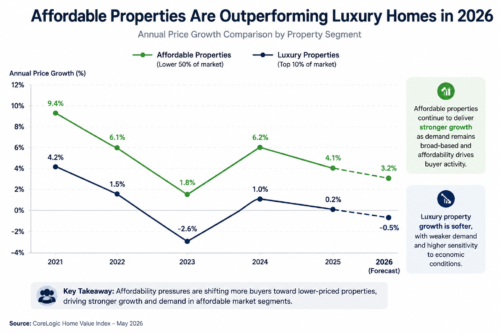
This graph highlights how affordable property segments are maintaining stronger demand and steadier growth compared to luxury housing markets during 2026.
As affordability pressures increase, more buyers are prioritising practical purchasing decisions based on borrowing capacity, rental demand, and long-term financial sustainability. This shift is helping affordable properties outperform premium housing segments in many Australian markets.
Affordable Markets Often Recover Faster
Historically, affordable housing markets tend to recover faster during uncertain economic periods because they attract a broader buyer base. Entry-level and middle-market properties usually remain active even when premium segments slow down.
This broader demand base creates more market stability and can support consistent long-term growth. Investors focused on affordability-driven demand may therefore benefit from stronger resilience during changing economic conditions.
Frequently Asked Questions (FAQ)
- Why are affordable properties outperforming luxury homes in 2026?
Affordable properties attract a larger buyer pool, stronger rental demand, and better accessibility during high interest rate periods. - Are luxury homes declining in value?
Not necessarily. However, luxury markets are generally experiencing slower growth and reduced buyer activity compared to affordable segments. - Why do investors prefer affordable properties right now?
Many affordable properties offer stronger rental yields and broader tenant demand, improving cash flow during higher-rate environments. - Will affordable properties continue performing strongly?
Performance depends on local supply and demand, but affordability-driven demand remains a strong support factor in many markets. - What type of properties are attracting the most demand?
Affordable homes, smaller dwellings, and properties in growth corridors with strong rental demand are attracting significant interest.
What This Means for Property Investors
The key takeaway is that affordable properties are benefiting from broader demand, stronger rental performance, and improved accessibility in the current market environment.
While luxury homes still hold long-term appeal, the strongest market momentum in 2026 is increasingly concentrated in affordable and middle-market segments where demand remains deeper and more consistent.
At Citadel Agency, we help investors analyse market conditions beyond the headlines and identify opportunities in changing environments. If you want guidance on positioning your portfolio for the next phase of the market cycle, you can connect with our team. You can also access more insights through our property investment guidance hub.