
Interest rates are one of the most powerful forces shaping the Australian property market, and right now, they are front of mind for investors. Whether rates are rising, holding, or expected to fall, they directly influence borrowing capacity, property prices, and overall investment strategy. Understanding how interest rates work and what they mean in the current environment is essential for making informed property decisions.
Why Interest Rates Matter for Property Investors
Interest rates determine the cost of borrowing, which directly affects how much investors can afford to spend on property. When rates rise, mortgage repayments increase, reducing borrowing capacity and often cooling demand. Higher interest rates are used to slow inflation, but they also tend to reduce housing demand as borrowing becomes more expensive.
At the same time, lower rates typically stimulate borrowing and increase competition in the property market. This relationship between rates and demand is one of the key drivers behind property cycles in Australia.
The Current Interest Rate Environment
Australia has experienced a period of elevated interest rates following aggressive tightening by the central bank to control inflation. This has led to a noticeable shift in buyer behaviour, with some investors becoming more cautious while others are adjusting their strategies to maintain cash flow.
Higher interest rates have moderated price growth in some markets but have not completely stopped demand, particularly in areas with strong population growth and limited supply. This highlights that while interest rates are influential, they are not the only factor driving property performance.
Property Market Trends vs Interest Rates
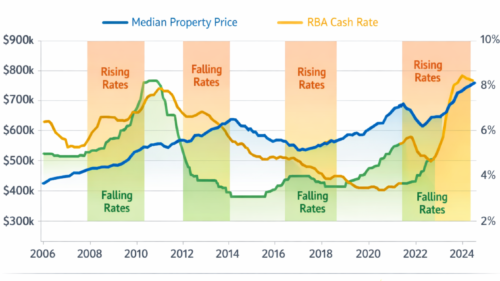
This chart illustrates the relationship between interest rate movements and property price trends over time. While rising rates often slow price growth or create short-term dips, the broader trend shows that property values tend to recover and grow over the long term.
What this means for investors is that interest rates often influence timing and strategy, rather than completely determining long-term outcomes. Investors who focus only on short-term rate movements may miss opportunities created during periods of reduced competition.
Borrowing Power and Cash Flow
Higher interest rates reduce borrowing capacity because lenders assess your ability to repay loans at higher thresholds. This means investors may qualify for smaller loans compared to low-rate environments. Rising interest costs significantly impact disposable income, which in turn affects how much households can allocate toward property investments.
At the same time, cash flow becomes a critical consideration. Investors holding negatively geared properties may feel increased pressure as repayments rise. However, in tight rental markets, higher rents can partially offset these costs, helping maintain investment viability.
Frequently Asked Questions (FAQ)
- How do interest rates affect property prices in Australia?
Interest rates influence borrowing capacity and demand. Higher rates generally slow price growth, while lower rates can increase demand and push prices higher. - Should I invest in property when interest rates are high?
It depends on your strategy. High-rate environments can offer less competition and better buying opportunities, especially for long-term investors. - Will property prices fall if interest rates rise?
Not always. While higher rates can slow growth, other factors like supply shortages and population growth can still support prices. - How can investors manage higher interest rates?
Investors can focus on cash flow, consider fixed-rate options, maintain financial buffers, and choose properties with strong rental demand. - Are interest rates expected to fall soon?
Interest rate movements depend on inflation and economic conditions. Monitoring updates from the RBA is essential for understanding future trends.
Strategic Considerations for Investors Right Now
Investors today need to balance caution with opportunity. Interest rates may remain elevated in the short term, but markets continue to evolve. Structuring your investment correctly, maintaining buffers, and focusing on long-term growth drivers are key to navigating this environment.
If you’re considering your next move, you can connect with our team to discuss your options. You can also explore more insights through our property investment resources to stay informed and confident in your decisions.