In this article 13 sections
- Key takeaways
- What counts as industrial property?
- Small strata bays or freestanding warehouses: what is the difference?
- How does zoning affect an industrial property?
- Who rents industrial property?
- What lease terms should you expect?
- What building checks matter for industrial property?
- What outgoings and taxes apply to industrial property?
- How do you work out the yield on an industrial property?
- How do you choose the location for industrial property?
- How is finance different for industrial property?
- Frequently asked questions
- Sources
Industrial property investment means buying a warehouse, factory or small strata bay and leasing it to a business tenant, usually on a longer lease than a house, with the tenant often paying many of the running costs. Before you buy, check the zoning, the tenant and the lease, and whether the building actually works for industrial users: clearance height, truck access, power supply and floor strength.
Key takeaways
- Industrial property covers small strata bays, freestanding warehouses, factories and storage or distribution buildings.
- Zoning controls what a tenant can legally do on the site, so check the zone in the local planning scheme before you look at the rent.
- Lease terms (length, rent reviews, outgoings, security and make good) drive the value as much as the bricks and mortar.
- Physical checks matter: clearance height, roller door size, truck turning space, power capacity and floor loading decide who can use the building.
- In Victoria, commercial and industrial property bought from 1 July 2024 can enter the Commercial and Industrial Property Tax regime, which changes the long term tax picture.
What counts as industrial property?
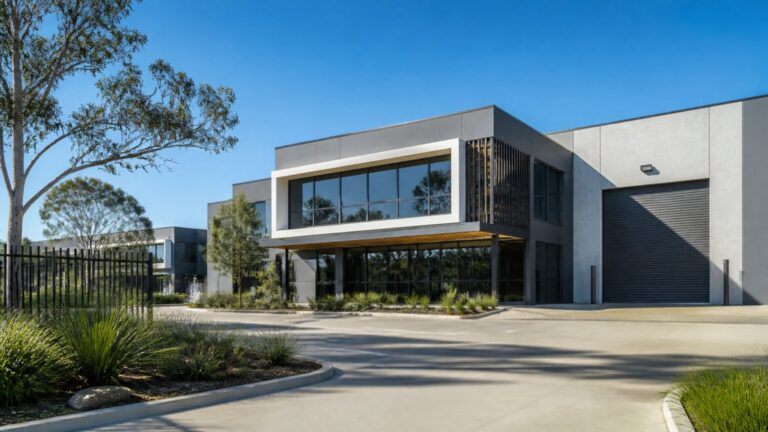
Industrial property is land and buildings used for making, storing, repairing or moving goods. In practice, investors usually look at four types:
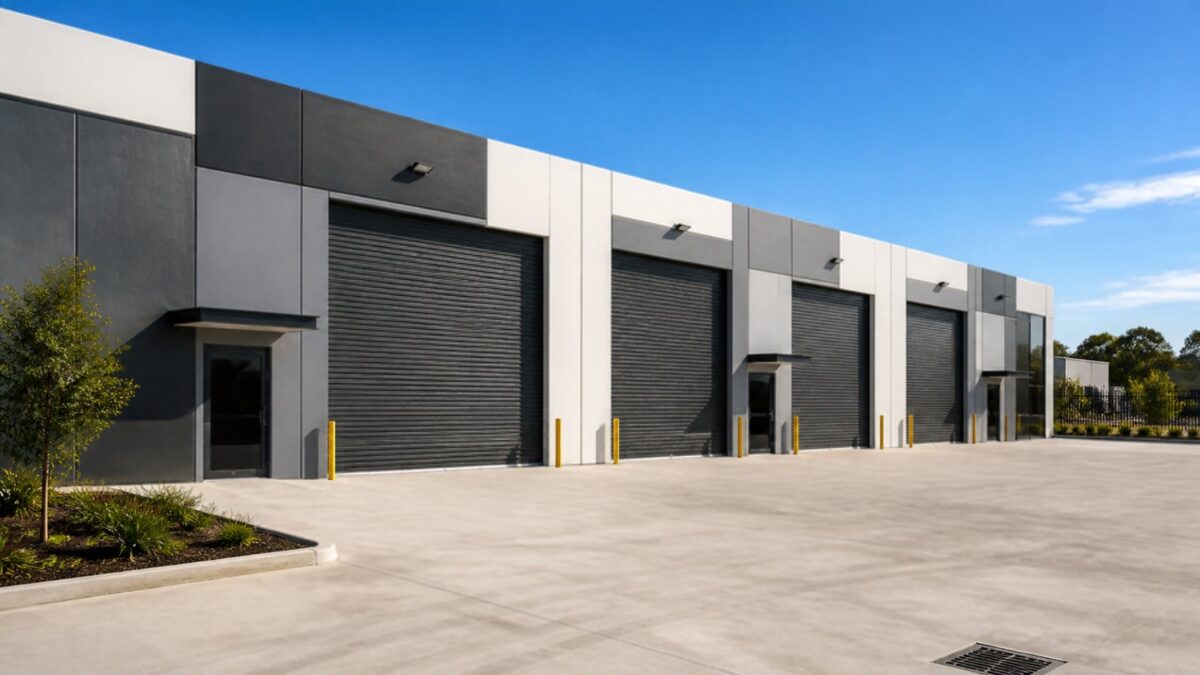
- Small strata bays. Units in a complex of similar bays, each with its own title, roller door and often a small office or mezzanine. They are common entry points for investors moving from residential.
- Freestanding warehouses. A single building on its own title, with its own yard, parking and access.
- Factories and workshops. Buildings fitted out for manufacturing, engineering, panel beating or trade use.
- Storage and distribution sites. Larger buildings designed around truck access, loading and storage.
Each type attracts a different tenant pool, so the right question is not just “is it industrial?” but “who would rent this building if the current tenant left?”
Small strata bays or freestanding warehouses: what is the difference?
The main differences come down to price, control and tenant depth.
Strata bays. You own one lot in a complex and share common property, such as driveways, with other owners. An owners corporation (body corporate) manages the common areas and charges levies. Your control over the site is limited by the owners corporation rules, so read the strata records, the rules and the minutes before buying. The same habits apply as for residential strata: look for disputes, special levies and planned works.
Freestanding warehouses. You own the whole site, including the land around the building. That gives more control over access, expansion and future use, but it also means the whole building’s maintenance and compliance sits with you or the tenant under the lease.
Smaller bays tend to suit trades, small businesses and storage users. Larger freestanding buildings tend to suit established businesses that need yard space, multiple doors or heavy vehicle access.
How does zoning affect an industrial property?
Zoning tells you what can legally happen on the land. Every state has its own planning scheme or local environmental plan, and industrial land usually sits in specific industrial or employment zones.
Victoria. Victorian planning schemes use three industrial zones. As one council’s information sheet explains, the Industrial 1 Zone provides for manufacturing, storage and distribution of goods without affecting the safety and amenity of local communities. The Industrial 2 Zone is for manufacturing and storage that needs a substantial buffer distance. The Industrial 3 Zone is for industries whose impacts need special consideration, and it allows limited retailing in appropriate locations. Council also notes that buildings and works and subdivision in industrial zones usually need planning permission.
New South Wales. NSW replaced its business and industrial zones with new employment zones, which commenced on 26 April 2023 according to the NSW planning department. If you are reading older contracts or reports, the zone names may have changed, so check the current local environmental plan.
Other states. Queensland, South Australia, Western Australia, Tasmania, the ACT and the NT each use their own planning schemes and zone names. The council or the state planning portal will confirm the zone and any overlays.
Also check overlays (for example flooding, heritage or environmental controls), any planning permit conditions on the current use, and whether the tenant’s activity actually fits the zone. A tenant operating outside its permitted use is a risk you inherit as the owner.
Who rents industrial property?
Industrial tenants range from sole traders to national businesses. Common tenant types include:
- Trades and services, such as electricians, plumbers and builders storing tools and materials.
- Light manufacturing and fabrication.
- Automotive businesses, such as mechanics, tyre fitters and panel beaters.
- Wholesale, e commerce and storage businesses.
- Transport and logistics operators.
- Food production and distribution, which often need specific services such as cool rooms and drainage.
Think about the tenant’s covenant, which means the financial strength behind the lease. A larger, established business may be a stronger covenant than a new sole trader, but check what the lease and any security actually commit them to. Some tenants also invest heavily in fit out, which can make them less likely to move.
What lease terms should you expect?
Industrial leases are negotiated between the parties, so terms vary. These are the terms to understand first.
Net lease. Under a net lease the tenant pays rent plus some or all of the property’s outgoings. Under a gross lease the rent covers those costs and the landlord pays them. Many industrial leases are net, but read the outgoings clause rather than assuming.
Outgoings. These are the property’s running costs, such as council rates, water rates, insurance, owners corporation levies and maintenance. The lease decides which ones the tenant pays.
Lease term and options. The initial term plus any options to renew. An option is the tenant’s right, not obligation, to extend.
WALE. The weighted average lease expiry is the average time left on the leases in a property, weighted by rent. For a single tenant building it is simply the time left on that lease. A short WALE means re-leasing risk sooner.
Rent reviews. Fixed percentage increases, CPI based increases or market reviews. Check the review dates and method in the lease.
Bank guarantee. A bank guarantee is a written promise from the tenant’s bank to pay the landlord up to a set amount if the tenant defaults. It is a common form of security on commercial leases, alongside cash bonds and personal guarantees from directors.
Make good. A make good clause says what condition the tenant must return the premises in at the end of the lease, for example removing fit out and repairing damage. Vague make good clauses lead to disputes, so check for a condition report or photos from the start of the lease.
What does a strong lease look like in a purchase we made?
From our own commercial purchases for clients: a 2,346 sqm commercial site at Yatala in Queensland, between Brisbane and the Gold Coast, was bought for $3,500,000 at a 6.0% yield at purchase. The lease runs 5 + 5 + 5 years with fixed 3% rent increases each year, it is backed by a director’s guarantee, and the tenant pays all outgoings. Those are the lease points we read first on any industrial or commercial property: how long the income is secured, how the rent rises, who pays outgoings and what stands behind the tenant. Figures are at the time of purchase and are not a forecast. See all three on our commercial buyers agent page.
What building checks matter for industrial property?
An industrial building is a working tool for the tenant. If it does not suit the work, it will be harder to lease. Check these with a building inspector, engineer or other qualified professional:
- Clearance height. The usable height under the lowest point of the roof structure. It limits racking, forklifts and storage.
- Roller doors. Number, height and width, and whether trucks can back up to them.
- Access and turning. Driveway width, truck turning circles, hardstand (sealed yard area) and street access for larger vehicles.
- Power. Whether there is three phase power and enough capacity for the tenant’s machinery. Upgrades can be expensive.
- Floor loading. Slab strength for heavy machinery, racking and forklifts.
- Office and amenities. Size and condition of any office, toilets and kitchenette.
- Fire safety and essential services. Sprinklers, hydrants, exits and maintenance records.
- Roof, drainage and asbestos. Older buildings may have ageing roofs or asbestos materials that need management.
- Contamination. Past industrial uses can leave soil or groundwater contamination. Ask about the site history and consider environmental advice for higher risk sites.
Our due diligence checklist covers the broader checks before you commit.
What outgoings and taxes apply to industrial property?
Common outgoings include council rates, water and sewerage charges, building insurance, land tax, owners corporation levies, fire services maintenance and general repairs. Whether you or the tenant pays each one depends on the lease and, in some cases, state law.
Victoria’s Commercial and Industrial Property Tax (CIPT). According to the Victorian Department of Treasury and Finance, a property enters the reform when 50% or more of it is transacted with contract and settlement on or after 1 July 2024, there is a duty liability, and it has a qualifying commercial or industrial use at settlement. Stamp duty is paid one final time on that transaction. Ten years later, CIPT starts at a flat 1% a year of the property’s unimproved land value, with no tax free threshold. Later sales that keep a qualifying use do not attract stamp duty. Check the State Revenue Office for the current rules before you buy, and use our stamp duty calculator as a starting point only.
GST. Commercial property sales often involve GST. The ATO says a sale can be GST free as a going concern if it is for payment, the buyer is registered or required to be registered for GST, and both parties agree in writing that it is a going concern. A going concern means the seller supplies everything needed to keep the enterprise running and keeps running it until the day of sale. For a leased building, that usually means the property and all leases are included. Your accountant should confirm the GST treatment before you sign.
How do you work out the yield on an industrial property?
Commercial property is usually assessed on net yield, which is the net rent (rent after the landlord’s outgoings) divided by the price.
Hypothetical example, round numbers only: a property bought for $1,000,000 with $60,000 net rent a year has a net yield of 6%. If the purchase costs (stamp duty, legal fees and so on) are added to the price, the yield on your total outlay is lower.
You will also hear the term cap rate (capitalisation rate). Valuers use it to convert net income into a value. A lower cap rate means a higher value for the same income. The cap rate is not a promise of return, and it moves with the market and the lease.
Our rental yield calculator and our guide to investment property feasibility show how to test the numbers, including vacancy periods and capital costs.
How do you choose the location for industrial property?
Industrial tenants care about different things from residential tenants. Look at access to arterial roads and freeways, proximity to customers and workers, the depth of local industrial demand, and the supply of competing buildings. The same research habits we describe in how to analyse a suburb before buying apply, with more focus on transport and the local business base.
How is finance different for industrial property?
Lenders usually assess commercial loans differently from home loans, looking closely at the lease, the tenant and the property type. Speak to a broker who handles commercial lending early, before you make an offer.
Frequently asked questions
What is a small strata industrial bay?
It is one unit in a complex of industrial units, each on its own title, sharing common areas managed by an owners corporation. Bays usually have a roller door, a small office or mezzanine and parking.
Who pays outgoings on an industrial lease?
It depends on the lease. Under a net lease the tenant pays rent plus some or all outgoings. Under a gross lease the landlord pays them out of the rent. Always read the outgoings clause.
What zone is industrial property in?
It depends on the state. Victoria uses the Industrial 1, 2 and 3 Zones. NSW moved to new employment zones on 26 April 2023. Check the current planning scheme or local environmental plan for the exact zone and overlays.
What does make good mean in a commercial lease?
It is the tenant’s obligation to return the premises in an agreed condition at the end of the lease, such as removing fit out and repairing damage. A clear clause and a starting condition report reduce disputes.
Is stamp duty payable on industrial property in Victoria?
For property entering the Commercial and Industrial Property Tax regime from 1 July 2024, stamp duty is paid one final time on the entry transaction. CIPT then starts 10 years later at 1% a year of unimproved land value. Check the State Revenue Office for current rules.
Sources
- Campaspe Shire Council: Information sheet, industrial zones
- NSW Department of Planning: Employment zones reform
- Victorian Department of Treasury and Finance: Commercial and Industrial Property Tax Reform information sheet
- ATO: Selling a going concern
Citadel Agency is a licensed buyers agency that also buys industrial, retail and medical or childcare property for investors. Thinking about your first commercial purchase? Book a free strategy call with our team.
General information only. It does not take into account your objectives, financial situation or needs. Speak to a qualified professional before acting.
General information only. It does not take your objectives, financial situation or needs into account and is not financial, tax, credit or legal advice.