
Australia’s housing shortage remains one of the most significant challenges facing the property market in 2026. Population growth continues to accelerate, driven by migration, natural population increases, and household formation, while the delivery of new homes struggles to keep pace.
The result is a growing imbalance between housing supply and demand. This shortage is contributing to rising rents, low vacancy rates, affordability pressures, and continued competition among buyers and tenants.
For investors, understanding the relationship between population growth and housing construction is critical because it helps explain many of the trends shaping Australia’s property market today.
Why Population Growth Is Increasing Housing Demand
Australia’s population continues to grow through a combination of overseas migration, international students, and natural population growth. As more people arrive, additional housing is required to accommodate new households.
This demand extends beyond major cities and is increasingly influencing regional growth corridors where affordability and lifestyle factors attract new residents. Every new household requires somewhere to live, whether through home ownership or rental accommodation.
As population growth continues, housing demand naturally increases, placing additional pressure on existing housing stock.
New Housing Construction Is Facing Challenges
Although governments and developers are attempting to increase housing supply, several obstacles continue slowing construction activity. Rising building costs, labour shortages, financing constraints, planning approvals, and supply chain disruptions have all affected housing delivery.
Many residential projects are taking longer to complete than originally expected, reducing the number of homes entering the market. In some cases, developments have been delayed or cancelled altogether due to increased construction costs.
As highlighted by the National Housing Supply and Affordability Council, Australia faces significant housing supply challenges that may persist for several years.
The Supply Gap Is Supporting Property Demand
When population growth outpaces housing construction, supply shortages become more pronounced. This creates additional competition among buyers and renters, particularly in areas where housing availability is already limited.
Low housing supply can help support property values and rental demand because there are fewer properties available to meet growing demand. This imbalance has become one of the key drivers of market resilience despite higher interest rates.
Rental Markets Are Feeling the Pressure
The housing shortage is having a direct impact on Australia’s rental market. As fewer households are able to purchase homes and new housing supply remains constrained, more people remain in rental accommodation for longer.
This has contributed to low vacancy rates, strong tenant competition, and ongoing rental growth in many locations. Investors are paying close attention because rental demand remains one of the strongest indicators of market performance.
Can Construction Eventually Catch Up?
Governments at all levels are introducing policies aimed at increasing housing supply, accelerating approvals, and encouraging new development. Large-scale housing targets have also been announced to help address future demand.
However, closing the supply gap is unlikely to happen quickly. Even if construction activity increases, it can take years for new housing projects to move from planning to completion.
This means housing shortages may continue influencing property markets for the foreseeable future, particularly in areas experiencing strong population growth.
Population Growth vs New Housing Supply
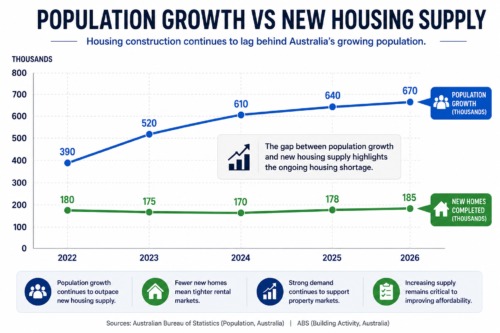
This graph compares Australia’s population growth with new housing completions over recent years.
The data highlights how population growth has consistently outpaced new housing supply, contributing to ongoing housing shortages, tighter rental markets, and continued demand for residential property.
What This Means for Property Investors
Australia’s housing shortage is not simply a short-term issue. It reflects a broader imbalance between population growth and housing delivery that continues supporting demand across many markets.
While future construction may help reduce some supply pressures, current trends suggest demand is likely to remain strong for years to come. Investors who understand these supply-and-demand dynamics may be better positioned to identify opportunities in markets with long-term growth potential.
Want to Understand Which Markets Benefit Most From Supply Shortages?
Housing shortages affect every market differently. At Citadel Agency, we help investors identify locations where population growth, housing demand, and supply constraints are creating strong long-term opportunities.
Book a personalized consultation with Citadel Agency and discover opportunities aligned with your investment goals.