In this article 12 sections
- Key takeaways
- What is different about buying commercial property?
- Step 1: How do you set a brief and budget for commercial property?
- Step 2: Which commercial asset type should you choose?
- Step 3: How do you find commercial property, on and off market?
- Step 4: What due diligence do you need on a commercial property?
- Step 5: What should you look for in the lease?
- Step 6: How do GST and stamp duty work when you buy commercial property?
- Step 7: How does finance work for commercial property?
- Step 8: What happens between exchange and settlement?
- Frequently asked questions
- Sources
Here is how to buy commercial property in Australia: start with a written brief and budget, choose the asset type that suits it, then find a property on or off market and run full due diligence on the building, the lease and the tenant. Your lawyer or conveyancer then checks GST and stamp duty treatment, your broker arranges finance, and the contract moves through to settlement.
Key takeaways
- In commercial property the lease and the tenant drive most of the value, so you are buying an income stream as much as a building.
- Check the zoning and any overlays before you fall for a property. Zoning decides what the site can legally be used for.
- A leased property sold with its tenants can be GST free as a going concern, but only if the ATO conditions are met and both parties agree in writing.
- In Victoria, a commercial or industrial purchase on or after 1 July 2024 can start a 10 year transition to the annual Commercial and Industrial Property Tax.
- Lenders usually assess commercial loans differently from home loans, so speak to a broker before you make offers.
What is different about buying commercial property?
Residential property is valued mostly on what similar homes sell for. Commercial property is valued mostly on the income it produces and how secure that income is. Two identical warehouses can be worth very different amounts if one has a long lease to an established business and the other is vacant.
That changes how you search, what you check and how you negotiate. You still care about location, access and building condition. You also need to read the lease line by line, understand who pays the running costs, and judge how easy it would be to re lease the property if the tenant left.
Commercial property covers several asset types. The ones most investors look at are:
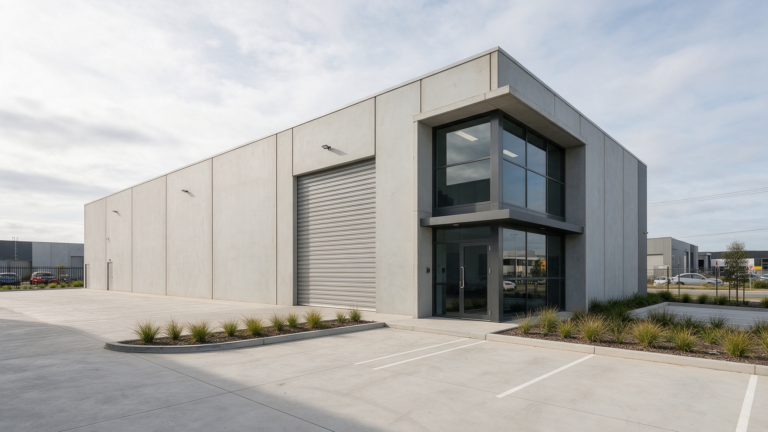
- Industrial and warehouses. Factories, storage and logistics buildings, often on larger lots with truck access.
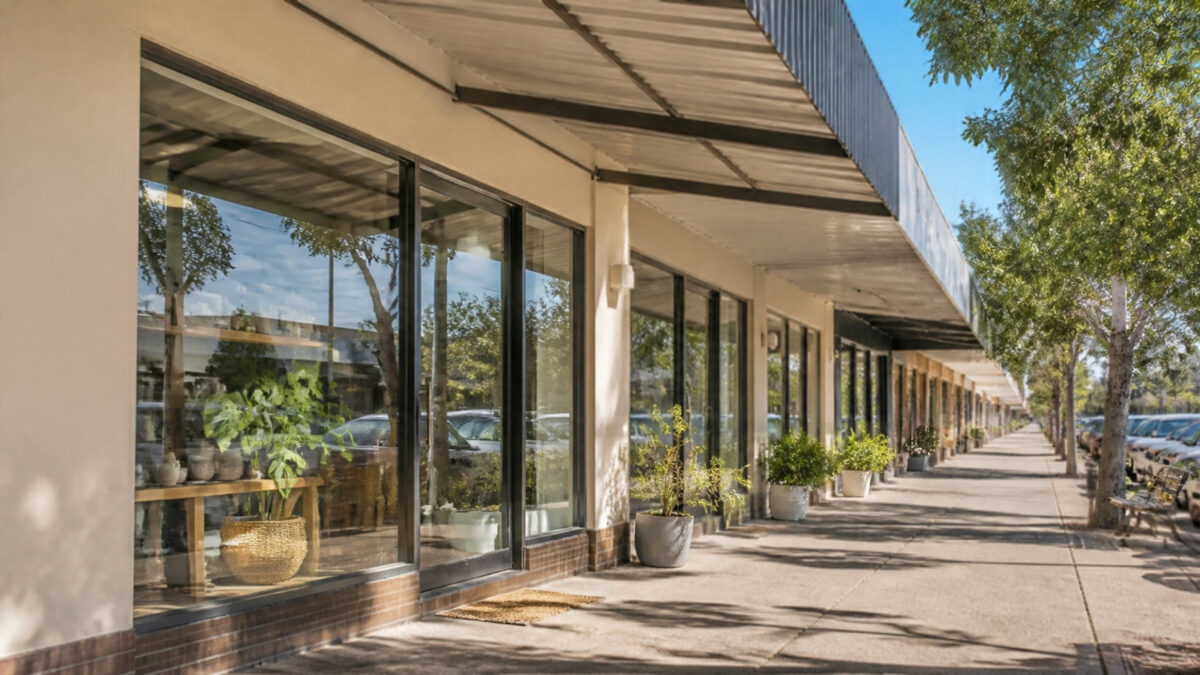
- Retail and shopfronts. Strip shops, small centres and standalone retail. Many retail leases are covered by state retail leases laws.
- Medical and childcare. Purpose built or fitted out premises for clinics, dental, allied health or early learning centres. The tenant’s business is often regulated, which adds checks.
Step 1: How do you set a brief and budget for commercial property?
Write down what you want the property to do. Are you after steady income, a building your own business can occupy, or a site with room to improve? Each goal points to a different kind of property and lease.
Your budget needs to cover more than the price. Allow for stamp duty, legal and conveyancing fees, building and pest or technical reports, valuation, lender costs and a buffer for vacancy or repairs. Our commercial briefs usually start from about $700,000, so the costs on top of the price add up quickly.
Decide early how you will hold the property. Ownership can be in your own name, jointly, through a company or trust, or in a self managed super fund. Each structure has tax and legal consequences, so speak to your accountant and lawyer before you sign anything. Buying through an SMSF has its own rules; speak to a licensed SMSF adviser and see our SMSF investing page.
Step 2: Which commercial asset type should you choose?
There is no single right answer. The asset type should match your brief, your budget and how hands on you want to be. Some practical questions help narrow it down:
- How long is the lease and how many years are left on it?
- How easy would it be to find a new tenant if the current one left?
- Does the property suit many types of tenant, or only one specialised use?
- How much fitout does a tenant need, and who owns it?
- Is the tenant’s business licensed or regulated, and does that affect the building?
A property that suits many uses can be easier to re lease. A specialised building can attract a committed tenant on a long lease, but it may take longer to replace that tenant if they leave. Neither is better in every case. What matters is that you understand the trade off before you buy.
Step 3: How do you find commercial property, on and off market?
Many commercial properties are advertised through commercial agents, on listing sites and at auction or by expressions of interest. Others change hands quietly, through agent networks, direct approaches to owners or properties offered to known buyers before a campaign starts.
Off market buying can mean less competition and more time for due diligence, but it also means fewer comparable sales in front of you. You need your own evidence of value. Our guide to off market property sales explains how these deals work and what to watch for.
Whichever channel you use, ask for the lease, the outgoings budget, any tenancy schedule and recent rent history before you make an offer. A seller who cannot produce these quickly is telling you something.
Step 4: What due diligence do you need on a commercial property?
Due diligence on commercial property has three parts: the land and building, the lease, and the tenant. Use our due diligence checklist as a starting point, then add the commercial checks below.
Zoning and planning. In Victoria, every parcel of land has a zone, and the zone directs the land to particular uses and shows whether a permit is needed. Overlays can add extra controls, for example for heritage or flood risk. Planning Victoria explains how planning schemes, zones and overlays work. Other states have their own planning schemes, and the local council can confirm what applies.
Building condition. Get a building report suited to the property type. For industrial and older buildings, ask about roof condition, structural issues, essential safety measures and any hazardous materials.
Permits and compliance. Check that the current use has the permits it needs and that any building works were approved. A medical or childcare tenant may also need the premises to meet requirements for their own licence or approval.
Title and services. Check the title for easements, covenants and caveats, and confirm access, parking and services such as power and water capacity.
Step 5: What should you look for in the lease?
The lease is the asset. Read it in full, ideally with a lawyer who works with commercial leases. Key points to check:
- Term and options. How many years are left, and does the tenant have an option to renew? An option is a right for the tenant to take a further term on the same terms.
- Rent and reviews. What is the current rent, and how and when does it change? Reviews can be fixed, linked to CPI or set at market.
- Outgoings. Outgoings are the running costs of the property, such as council rates, insurance and maintenance. The lease says which ones the tenant pays.
- Security. Is there a bond or bank guarantee? A bank guarantee is a promise from the tenant’s bank to pay the landlord up to a set amount if the tenant defaults.
- Make good. A make good clause sets out how the tenant must return the premises at the end of the lease.
For a property with several tenants, ask for the WALE, which stands for weighted average lease expiry. It tells you the average time left on the leases, weighted by how much rent each tenant pays. Our property investing glossary covers more of these terms.
Step 6: How do GST and stamp duty work when you buy commercial property?
GST. The sale of commercial property is often subject to GST. The ATO explains that a GST registered business buying commercial property can usually claim the GST included in the price, but credits are not available if the seller used the margin scheme or if either party is not registered or required to be registered for GST.
Going concern. A going concern is a business that is sold with everything needed for it to keep running. For a leased property, the ATO says the sale of a going concern can be GST free when it is for payment, the buyer is registered or required to be registered for GST, and both parties agree in writing that it is a going concern. The leases must be included in the sale. A property sold by itself, with no lease, is not a going concern. If the buyer later uses the property for something like residential rent, an adjustment may apply.
Get the GST clause in the contract right before you sign. A mistake can add 10% to what you pay, so ask your accountant and lawyer to check it.
Stamp duty. Every state and territory charges duty on property transfers, and the rates and concessions differ. Use our stamp duty calculator for an estimate, then confirm with your conveyancer.
Victoria’s Commercial and Industrial Property Tax. In Victoria, the State Revenue Office says a property with a qualifying commercial or industrial use starts a 10 year transition when it is involved in an entry transaction on or after 1 July 2024. Stamp duty applies to that entry transaction. After the 10 years, the Commercial and Industrial Property Tax generally applies each year at 1% of the site value, and later transactions in that property may be exempt from duty. Land tax may still apply during the transition. Common qualifying uses include retail premises, offices, warehouses and factories.
Step 7: How does finance work for commercial property?
Lenders usually assess commercial loans differently from home loans. They tend to look closely at the lease, the tenant and the property type, as well as your own position. Terms and conditions can vary a lot between lenders and property types.
Speak to a broker who works with commercial lending before you start making offers, and make any contract subject to finance if you need it. This is general information only and not a recommendation of any lender or loan product.
Step 8: What happens between exchange and settlement?
Once the contract is signed, your lawyer or conveyancer handles the transfer, searches and adjustments. Rent, outgoings and any bond or bank guarantee are usually adjusted or transferred at settlement. Ask for a new bank guarantee or a transfer of the existing one in your name so the security follows the lease.
Before settlement, confirm that the tenant is paying rent, there are no notices of default, and any promised works are done. Plan who will manage the property from day one, including rent collection and the yearly outgoings reconciliation.
We buy industrial, retail and medical or childcare property for investors, and the same pattern holds across all of them: the more work you do before you sign, the fewer surprises you have after settlement.
Frequently asked questions
How much do you need to buy commercial property?
It depends on the property, your structure and your lender. The commercial briefs we work on usually start from about $700,000, and you also need to cover stamp duty, legal fees, reports and lender costs. A broker can explain what a lender may need from you.
Do you pay GST when buying commercial property?
Often, yes. A leased property sold with its tenants can be GST free as a going concern if the buyer is registered or required to be registered for GST and both parties agree in writing. Ask your accountant and lawyer to check the GST clause before you sign.
What is a going concern in commercial property?
It is a sale that includes everything needed for the business to keep operating. For a leased property, that means the property is sold with all its leases, agreements and covenants. A property sold by itself is not a going concern.
What is the Commercial and Industrial Property Tax in Victoria?
It is an annual tax on the land value of commercial and industrial property. It applies after a 10 year transition that starts with an entry transaction on or after 1 July 2024, and it generally applies at 1% of the site value each year.
Can you buy commercial property off market?
Yes. Some commercial properties are sold through agent networks or direct approaches without a public campaign. You still need full due diligence and your own evidence of value before you commit.
Sources
- ATO: GST and commercial property
- ATO: Selling a going concern
- State Revenue Office Victoria: Understanding commercial and industrial property tax
- Planning Victoria: Planning schemes
Citadel Agency is a licensed buyers agency that also buys commercial property for investors.
Thinking about your first commercial purchase? Book a free strategy call with our team.
General information only. It does not take into account your objectives, financial situation or needs. Speak to a qualified professional before acting.
General information only. It does not take your objectives, financial situation or needs into account and is not financial, tax, credit or legal advice.