
Australia’s housing market continues to evolve, and one of the fastest-growing sectors attracting attention in 2026 is Build-to-Rent (BTR). While Build-to-Rent has been established in markets such as the United States and the United Kingdom for many years, it is becoming an increasingly important part of Australia’s housing landscape.
As rental demand continues to rise and housing affordability remains challenging, institutional investors, developers, and policymakers are looking at Build-to-Rent projects as a potential solution to housing shortages and rental market pressures.
For property investors, understanding the growth of Build-to-Rent is becoming increasingly important as it may influence rental markets, tenant expectations, and future investment opportunities.
What Is Build-to-Rent?
Build-to-Rent refers to residential developments specifically designed and constructed for long-term rental accommodation rather than individual property sales. Instead of selling apartments or homes to individual owners, an institution or developer retains ownership of the entire development and manages it as a rental community.
These projects often include professional management, shared amenities, longer lease options, and a focus on tenant experience. The model is designed to provide stable rental housing while generating long-term income for investors.
As the sector expands, Build-to-Rent is becoming an increasingly visible part of Australia’s residential property market.
Why Build-to-Rent Is Growing
Several factors are contributing to the growth of Build-to-Rent across Australia. Strong population growth, housing shortages, low vacancy rates, and rising rental demand have increased the need for additional rental housing supply.
At the same time, institutional investors are attracted to the stable income streams that Build-to-Rent developments can provide. Long-term rental demand can create predictable cash flow and portfolio diversification opportunities.
Government support and policy initiatives in some states are also encouraging further development within the sector.
Rental Demand Is Supporting Expansion
Australia’s rental market remains under significant pressure. Low vacancy rates and rising rents continue affecting many major cities and regional centers.
Build-to-Rent developments are being promoted as one way to increase rental housing supply and provide more housing options for renters. By delivering purpose-built rental accommodation, these projects may help address some of the challenges facing Australia’s rental market.
This trend aligns with why Australia’s rental vacancy rates remain near historic lows, where limited housing supply continues supporting rental demand.
What Does This Mean for Private Investors?
Some private investors wonder whether Build-to-Rent developments will increase competition in the rental market. While the sector is expanding, Build-to-Rent currently represents only a small portion of Australia’s overall housing stock.
According to industry analysis, Build-to-Rent is expected to become an important part of Australia’s housing mix, but private investors continue to provide the majority of rental housing across the country. The relatively small scale of the sector means traditional property investors remain a critical component of rental supply.
Rather than replacing traditional property investment, Build-to-Rent is likely to complement existing housing supply. The continued shortage of housing means demand remains strong across multiple property types.
Private investors can still benefit from markets where population growth, employment opportunities, and housing shortages continue supporting rental demand.
Tenant Expectations Are Evolving
One of the most significant impacts of Build-to-Rent may be the changing expectations of renters. Professionally managed developments often offer amenities, responsive maintenance, community spaces, and flexible leasing arrangements.
As these developments become more common, some tenants may place greater value on service quality and property management standards.
Investors who focus on tenant experience, property presentation, and quality management may be better positioned to remain competitive as the rental market evolves.
The Growth of Build-to-Rent in Australia
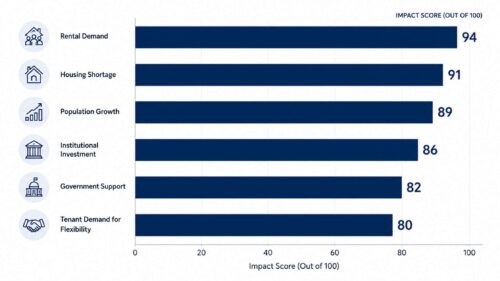
This graph highlights the key factors driving the expansion of Australia’s Build-to-Rent sector during 2026.
The data shows that rental demand, housing shortages, population growth, and institutional investment are among the primary forces supporting continued sector growth.
What This Means for Property Investors
The growth of Build-to-Rent reflects broader changes occurring across Australia’s housing market. Rising rental demand, population growth, and housing shortages are creating opportunities for both institutional and private investors.
While Build-to-Rent is unlikely to replace traditional property investment, it highlights the increasing importance of rental housing and the growing demand for quality accommodation.
Want to Understand How Emerging Trends Could Impact Your Investment Strategy?
The property market is constantly evolving, and understanding trends such as Build-to-Rent can help investors make more informed decisions. At Citadel Agency, we help investors identify opportunities backed by strong market fundamentals and long-term demand drivers.
Whether you’re expanding your portfolio or evaluating emerging opportunities, expert guidance can help you invest with confidence.