

Employment has always been one of the strongest drivers of housing demand, but in 2026 it is becoming an even more important factor influencing where investors choose to buy. As new business districts, industrial precincts, logistics centers, healthcare hubs, and technology corridors continue expanding across Australia, investors are paying close attention to the markets benefiting from these developments.
Major employment hubs attract workers, businesses, and supporting infrastructure, all of which contribute to increased demand for housing. As more people move closer to employment opportunities, both owner-occupier and rental demand can strengthen significantly.
For investors, understanding where employment growth is occurring can help identify markets that may experience stronger long-term demand and future growth potential.
Why Employment Growth Matters for Property Markets
Employment opportunities are one of the primary reasons people choose where to live. Areas with strong job creation often attract new residents seeking career opportunities, financial stability, and lifestyle benefits.
As employment hubs expand, demand for nearby housing typically increases. Workers often prefer shorter commuting times, making surrounding suburbs attractive locations for both homebuyers and renters. According to the Australian Bureau of Statistics, many of Australia’s fastest-growing regions continue benefiting from population increases linked to employment opportunities and economic growth.
This relationship between employment and housing demand has helped drive growth in many Australian property markets over the long term.
Healthcare and Education Precincts Are Expanding
Healthcare and education sectors continue generating significant employment growth across Australia. New hospitals, medical facilities, universities, and research centers are creating thousands of jobs while attracting students, healthcare professionals, and support workers.
These institutions often create stable, long-term employment opportunities that support ongoing housing demand. Areas surrounding major healthcare and education precincts frequently experience strong rental demand due to the large workforce they attract.
Investors are increasingly recognizing the benefits of markets supported by these essential industries.
Logistics and Industrial Hubs Are Creating New Demand
The growth of e-commerce, warehousing, and logistics has led to significant investment in industrial precincts across Australia. Distribution centers, transport infrastructure, and logistics facilities are creating employment opportunities in both metropolitan and regional locations.
As these hubs expand, nearby housing markets often benefit from increased demand from workers seeking convenient access to employment.
This trend is particularly evident in growth corridors where industrial development and population growth are occurring simultaneously.
Infrastructure Often Supports Employment Growth
Many employment hubs emerge alongside major infrastructure investment. New roads, rail links, airports, and transport projects improve accessibility and encourage business expansion.
Infrastructure investment not only creates jobs directly but can also attract additional employers and industries to a region. As economic activity grows, housing demand often follows.
Investors Are Following Long-Term Demand Drivers
Rather than focusing solely on short-term market movements, many investors are concentrating on areas supported by long-term employment growth. Stable employment can contribute to population growth, stronger household formation, and sustained housing demand.
Markets benefiting from diverse employment sectors often demonstrate greater resilience during changing economic conditions. This diversity can help support both rental demand and property values over time.
As discussed, investors increasingly prioritize markets with strong underlying demand drivers rather than relying solely on market sentiment.
Employment Hubs Driving Property Demand
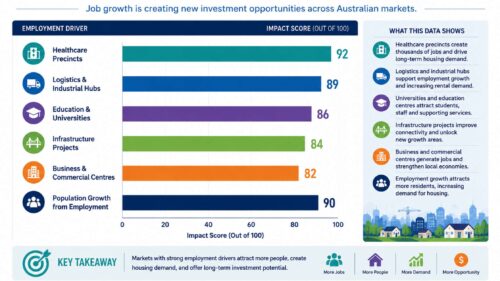
This graph highlights the major employment-related factors influencing property demand in Australian markets during 2026.
The data demonstrates how healthcare, logistics, education, infrastructure investment, and broader job growth are contributing to increased housing demand and investor interest.
What This Means for Property Investors
Employment growth remains one of the most reliable indicators of future housing demand. Markets benefiting from expanding employment hubs often attract new residents, support rental demand, and create long-term growth opportunities.
While employment growth should not be the only factor considered when investing, it remains one of the strongest indicators of an area’s long-term economic strength and housing demand.
Frequently Asked Questions
- Why are employment hubs important for property investors?
Employment hubs attract workers, support population growth, and often increase demand for both rental and owner-occupied housing. - Which industries are creating strong housing demand in 2026?
Healthcare, education, logistics, technology, and industrial sectors are among the strongest contributors. - How does employment growth affect property values?
Growing employment can attract new residents and increase housing demand, supporting both rental markets and property values. - Are regional employment hubs attracting investors?
Yes. Many regional centers are benefiting from new industries, infrastructure projects, and population growth. - Should employment growth be the only factor considered?
No. Investors should also evaluate affordability, housing supply, infrastructure, rental demand, and broader market fundamentals.
Looking for Markets Supported by Strong Employment Growth?
The next wave of investment opportunities may be emerging in locations where jobs, infrastructure, and population growth are working together. At Citadel Agency, we help investors identify markets backed by strong economic fundamentals and long-term demand drivers.
Whether you’re exploring growth corridors, regional centers, or emerging employment hubs, expert guidance can help you invest with greater confidence.