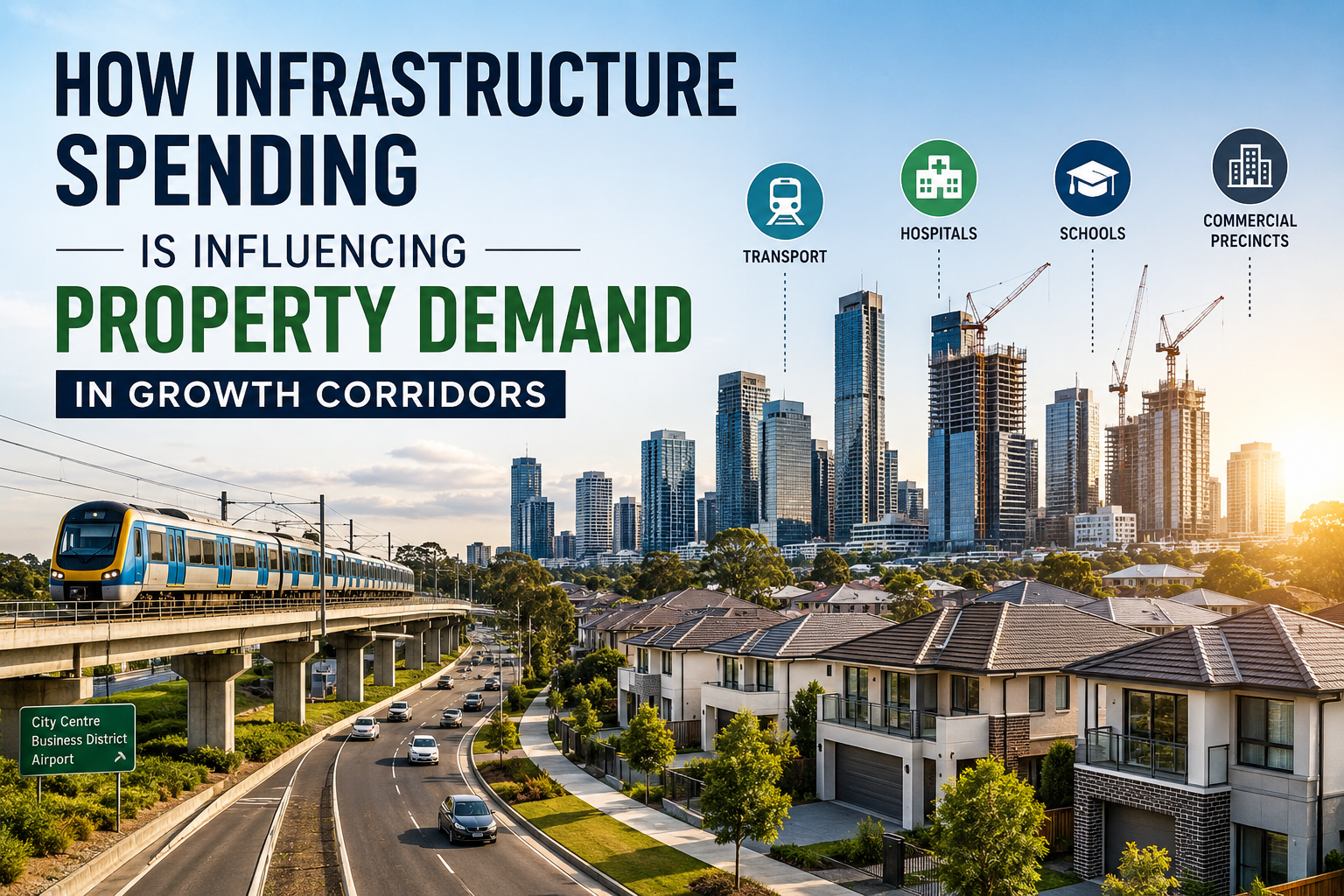
Infrastructure investment has long been one of the strongest drivers of property demand, and in 2026 it continues to play a major role in shaping Australia’s growth corridors. As governments invest in new transport networks, schools, hospitals, and community facilities, previously overlooked areas are becoming increasingly attractive to both residents and investors.
While infrastructure projects do not automatically guarantee property growth, they can significantly improve accessibility, employment opportunities, and overall liveability. These improvements often encourage population growth, which in turn increases housing demand.
For investors, understanding where major infrastructure spending is occurring can provide valuable insights into markets that may experience stronger long-term demand and future growth.
Why Infrastructure Matters to Property Markets
Infrastructure helps support the economic and social development of a region. Projects such as roads, rail links, airports, hospitals, schools, and commercial precincts can improve connectivity and make an area more attractive to residents and businesses.
When accessibility improves, more people are willing to live in surrounding suburbs while maintaining access to employment hubs and essential services. This often increases demand for both owner-occupied and rental properties.
Infrastructure investment can also create jobs during both the construction phase and long after projects are completed, helping support local economic activity and population growth.
Growth Corridors Are Benefiting Most
Many of Australia’s fastest-growing suburbs are located within designated growth corridors surrounding major capital cities. These areas are often targeted for significant infrastructure investment to support expanding populations.
New transport links, upgraded road networks, and community facilities can improve the appeal of these locations and encourage more people to move into the area. As population growth increases, demand for housing often follows.
This trend is particularly evident in growth regions across Sydney, Melbourne, Brisbane, Perth, and South East Queensland, where infrastructure spending continues to support long-term development.
Infrastructure Often Supports Population Growth
One of the biggest benefits of infrastructure spending is its ability to attract new residents. Improved transport, education, healthcare, and employment opportunities make an area more desirable for families, professionals, and businesses.
As population growth accelerates, demand for housing can increase significantly. In markets where housing supply remains constrained, this additional demand can contribute to stronger rental conditions and property values over time.
Investors Follow Long-Term Demand Drivers
Experienced investors often focus on the long-term effects of infrastructure rather than short-term market reactions. While project announcements may generate headlines, the real impact typically occurs as infrastructure improves liveability and supports sustained population growth.
This is why investors frequently assess whether infrastructure projects will create lasting demand rather than simply temporary interest. Markets supported by genuine economic and demographic growth tend to offer more sustainable opportunities.
Infrastructure Does Not Guarantee Growth
Although infrastructure can create positive conditions, it should never be viewed as the sole reason to invest in a market. Other factors such as housing supply, affordability, employment opportunities, rental demand, and population growth remain equally important.
Some areas receive major infrastructure investment but fail to achieve strong property performance because demand does not increase as expected. Investors should therefore evaluate infrastructure within the broader context of market fundamentals.
The most successful investment decisions are usually based on a combination of factors rather than a single growth driver.
What This Means for Property Investors
Infrastructure spending continues to be one of the most important long-term drivers of housing demand in Australia’s growth corridors. However, successful investors understand that infrastructure works best when combined with strong population growth, housing demand, and economic activity.
By focusing on markets where these factors align, investors can position themselves to benefit from both improved liveability and long-term demand growth.
Looking for Growth Corridors With Strong Long-Term Potential?
Infrastructure announcements alone don’t tell the full story. At Citadel Agency, we help investors identify markets where infrastructure investment, population growth, and housing demand are working together to create genuine opportunities.
Book your property investment consultation today.