

Investing in direct property through a Self‑Managed Super Fund (SMSF) gives trustees control over retirement savings, but it is one of the most regulated and complex strategies permitted under Australian super law. You must comply with strict legal requirements to avoid penalties and ensure your investment stays compliant with tax and superannuation rules.
Self-Managed Super Funds have grown significantly in popularity across Australia because they provide greater control, transparency, and flexibility compared to traditional retail or industry super funds. Instead of relying on external fund managers, trustees directly decide where their retirement savings are invested, including shares, cash, managed funds, and property.
However, with this control comes responsibility. SMSF trustees are legally accountable for every decision made within the fund. Property investing through an SMSF can be highly rewarding, but it also involves strict compliance, detailed documentation, and long-term planning. Understanding both the opportunities and obligations is critical before committing retirement capital to real estate.
For a comprehensive, step-by-step guide on SMSF property investing strategies, including examples and practical tips, you can view this resource.
Key Rules for SMSF Property Investing
These rules exist to ensure that SMSFs are used strictly for retirement purposes and not for personal benefit. The Australian Taxation Office (ATO) closely monitors property transactions because misuse can lead to serious penalties, including fines, trustee disqualification, or loss of the fund’s concessional tax status.
Trustees should always treat the SMSF as a separate legal entity. Every purchase, lease, and expense must be conducted on commercial terms and supported with written evidence. Proper compliance not only protects the fund legally but also helps maintain long-term investment stability.
Here are the most important legal requirements trustees must follow:
- Sole Purpose Test – You must invest solely to provide retirement benefits for members — not for personal or living use.
- No Personal Use – Trustees or related parties cannot live in a property owned by the SMSF or receive any personal benefit from it.
- Arms‑Length Transactions – All property purchases, leases, and sales must occur at market value and be conducted on commercial terms.
- Business Real Property Exception – Commercial property can be leased to a related business if it meets strict requirements (e.g., market rent, written agreement).
- Borrowing Must Be Structured via an LRBA – Borrowing to buy property within an SMSF must be done under a Limited Recourse Borrowing Arrangement (LRBA), which limits the lender’s recourse to the property itself.
Failure to adhere to these can lead to contraventions, penalties, and compliance actions from the ATO.
Common Risks Trustees Face
While property can deliver long-term growth, it also exposes SMSFs to risks that are less common with diversified portfolios such as shares or managed funds. Because property is typically a large, single asset, poor planning or market declines can have a disproportionate impact on retirement savings. Recognizing these risks early allows trustees to prepare mitigation strategies. SMSF property investing carries risks that can impact long‑term retirement outcomes:
- Liquidity Risk – Property is illiquid, meaning it may be difficult to sell quickly if funds are needed for pensions or fees. This can create cash flow challenges.
- Concentration Risk – Holding a large portion of your SMSF in one asset class (like property) can reduce diversification and raise overall portfolio risk.
- Cash Flow and Loan Risk – Costs such as loan repayments, maintenance, vacancies, and management fees must be met from fund cash flow, which can strain resources if poorly planned.
- Regulatory Risk – The ATO regularly audits SMSFs for compliance, especially in property investments. Contraventions can result in penalties or fund disqualification.
Real Data and Market Trends
The chart highlights that SMSFs have delivered competitive returns over the 2012–2018 period, averaging 7.5% in 2017–18, compared with 8.5% for larger APRA-regulated funds. While SMSFs may offer comparable performance to larger funds, trustees must remain mindful of challenges such as fund management, asset allocation, and market volatility. Proper planning and adherence to SMSF rules are key to sustaining long-term growth and achieving retirement goals.
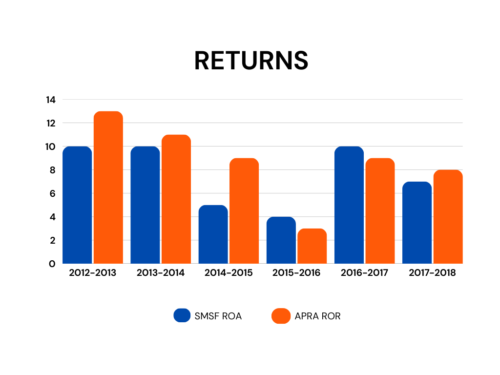
According to the ATO and industry data
| Metric | Data Source & Insight |
| Percentage of SMSF assets held in property | As of June 2025, there are 653,062 SMSFs with $1.05 trillion in assets. Top holdings include listed shares (28%) and cash/term deposits (16%). Average assets per SMSF: $1.6M |
| Growth of property holdings | SMSFs held approximately $168 billion in direct property (around 16.5 % of total SMSF assets) at December 2024, reflecting strong property allocation within SMSF |
Note: Direct property investment holdings vary year‑to‑year depending on market conditions and trustee choices.
What This Means for Trustees
- SMSF property investing is not “set‑and‑forget” — ongoing compliance, valuation evidence, and financial planning are essential.
- Trustees should regularly review cash flow and diversification.
- Documentation (market valuation, lease agreements, and rental evidence) is critical for audits.
Ultimately, SMSF property investing requires an active mindset. Trustees must regularly monitor financial performance, review compliance obligations, and adapt strategies as market conditions change. Unlike passive super funds, success depends heavily on informed decision-making and consistent oversight.
FREQUENTLY ASKED QUESTIONS (FAQ)
- Can I live in a property my SMSF owns?
No — any personal use conflicts with the sole purpose test and is prohibited. - Can my SMSF invest in property with an LRBA and then lease it to my business?
Yes, only if the lease is commercial, at market rates, and documented to satisfy ATO requirements. - Does the ATO check property values each year?
Yes — trustees must value SMSF property at market value annually and support this with objective evidence.
If you want a deeper look at your target suburbs or a second opinion on your property strategy, we can help. Our team can work with you to analyze the latest Australian property data, highlight opportunities, and help you make decisions with confidence and not guesswork. Get in touch with us today to discuss your SMSF property plan.
External Links: