

Capital Gains Tax (CGT) is one of the most important and often misunderstood components of property investing in Australia. For many investors, profit is calculated simply as the difference between purchase price and selling price. In reality, the tax consequences attached to that gain can significantly affect the final return on investment.
In Australia, CGT is not a separate tax. It forms part of your income tax and is governed by federal legislation administered by the Australian Taxation Office. Understanding how it works allows investors to structure purchases strategically, hold assets for the appropriate time, and manage liabilities efficiently.
This guide explains CGT in straightforward language while remaining technically accurate and aligned with current Australian tax law.
What Is Capital Gains Tax?
Capital Gains Tax was introduced in Australia in 1985 and applies to assets acquired on or after 20 September 1985, as confirmed by the Australian Taxation Office. When you sell an investment property for more than its cost base, the profit is considered a capital gain and becomes assessable income in the financial year the contract is signed.
According to the official guidance published by the Australian Taxation Office, capital gains are calculated by subtracting the asset’s cost base from its capital proceeds. The cost base includes more than just the purchase price; it may incorporate stamp duty, legal fees, buyers’ agent fees, and certain capital improvements.
Unlike some countries where capital gains are taxed at a flat rate, Australia taxes capital gains at your marginal income tax rate. This makes tax planning particularly important for higher-income property investors.
When Does CGT Apply to Property?
CGT applies when a “CGT event” occurs. For property investors, the most common CGT event happens when a contract for sale is signed. It is not triggered at settlement, but rather at the date of contract exchange.
Investment properties, commercial real estate, vacant land, and holiday homes are generally subject to CGT. However, a principal place of residence may qualify for the main residence exemption, provided certain conditions are met. The Australian Taxation Office provides clarification under its main residence exemption guidance, available at the ATO main residence page.
Understanding which properties qualify for exemptions is critical. Investors who convert a principal residence into a rental property may trigger partial CGT liabilities depending on the period of income-producing use.
How Capital Gains Are Calculated
The calculation of capital gains follows a structured method described by the Australian Taxation Office under the Capital proceeds and cost base section.
The formula is: Capital Gain = Capital Proceeds − Cost Base
Capital proceeds generally equal the sale price. The cost base may include acquisition costs, ownership costs not otherwise claimed, and capital improvements. It is important to distinguish between capital improvements and repairs, as repairs are generally deductible in the year incurred, whereas capital improvements form part of the cost base.
The 50% CGT Discount for Individuals
One of the most significant features of Australia’s CGT regime is the general discount method. As explained by the Australian Taxation Office on its CGT discount page, individuals and trusts may reduce their capital gain by 50% if the asset has been held for at least 12 months.
This means that only half of the capital gain is added to taxable income. For example, if the capital gain is $185,000 and the property was held for more than one year, the taxable gain becomes $92,500.
Companies are not eligible for this discount. Self-managed superannuation funds may access a one-third discount if the asset is held for more than 12 months.
The availability of this discount often influences investment holding strategies. Investors approaching the 12-month threshold frequently delay sale to access the discount.
CGT and the Main Residence Exemption
The main residence exemption is a cornerstone of Australian property taxation. Under this exemption, capital gains from the sale of a primary home may be entirely disregarded, provided eligibility requirements are met. This is explained by the Australian Taxation Office under the Main residence exemption rules.
However, complications arise when a property has been used both as a home and as an income-producing asset. The “six-year rule” allows individuals to treat a former home as their main residence for up to six years while renting it out, provided no other property is nominated as the main residence.
Investors who misunderstand this rule may inadvertently create partial CGT liabilities. Proper documentation and nomination decisions are therefore essential.
Graph: CGT Impact Over Time
The following graph demonstrates how CGT payable may differ depending on whether a property is sold before or after 12 months of ownership.
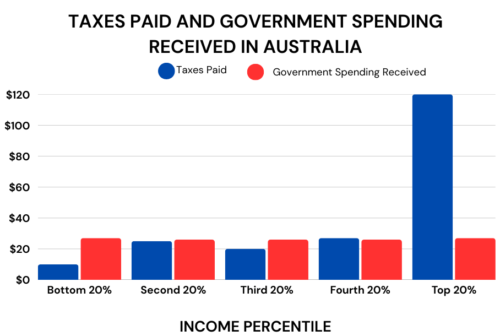
Table: Land Tax Rates by State
| State | Tax Thresholds and Tax Rate Bands | Land Tax Rates | Surcharge Land Tax |
|
New South Wales |
Tax threshold $1,075,000 $6,571,000 and over | $100 + 1.6% $88,036 + 2% above threshold | + 4% (+ 5% in 2025) no threshold |
|
Victoria |
Tax threshold $50,000 $300,000 $3,000,000 and over |
$500 $1,350 + 0.3% $31,650 + 2.65% above $3,000,000 |
+ 4% no threshold |
|
Queensland |
Tax threshold $500,000 $10,000,000 or more | $500 + 1% $150,000 + 2.25% |
+ 2% no threshold |
|
South Australia |
Tax threshold $732,000 $2,738,000 and over | 0.5% $28,110 + 2.4% |
N/A |
|
Western Australia |
Tax threshold $300,000 $11,000,000 and over | $300 $186,550 + 2.67% |
N/A |
|
Tasmania |
Tax threshold $100,000 $500,000 and over | $50 + 0.45% $1,850 + 1.5% |
+ 2% no threshold |
|
Australian Capital Territory |
No tax threshold $2,000,000 and above | 0.54% $20,930 + 1.14% All plus $1,535 |
+ 0.75% no threshold |
CGT Planning Strategies for Property Investors
Strategic planning can reduce CGT exposure. Investors may consider timing sales in lower-income years, offsetting gains with capital losses, or structuring ownership through trusts. The Australian Taxation Office explains how capital losses can be applied in its Capital losses guidance.
While tax minimisation strategies must always comply with Australian tax law, legitimate planning is both permissible and advisable.
Professional advice from a registered tax agent or accountant ensures compliance with current legislation.
Frequently Asked Questions (FAQ)
1. Is Capital Gains Tax a separate tax in Australia?
No. CGT forms part of your income tax and is included in your assessable income for the relevant financial year.
2. When exactly is CGT triggered?
CGT is triggered when the contract of sale is signed, not at settlement.
3. Do I pay CGT on my family home?
In most cases, no. The main residence exemption may apply if eligibility criteria are met.
4. How do I reduce my CGT legally?
You may reduce CGT by holding the property for more than 12 months to access the discount, offsetting capital losses, or ensuring accurate cost base inclusion.
5. Does refinancing affect CGT?
Refinancing does not trigger CGT because ownership has not changed.
6. Are overseas investors subject to CGT?
Yes. Non-residents are subject to CGT on Australian property and may not access the full CGT discount, as outlined by the Australian Taxation Office.
Conclusion
Capital Gains Tax is a fundamental consideration for Australian property investors. While the system is structured and transparent, its implications can materially affect investment returns.
Understanding how gains are calculated, when discounts apply, how exemptions operate, and how depreciation influences cost base ensures that investors approach property ownership strategically rather than reactively.
With informed planning and professional guidance, CGT becomes a manageable component of investment decision-making rather than an unexpected financial burden.